
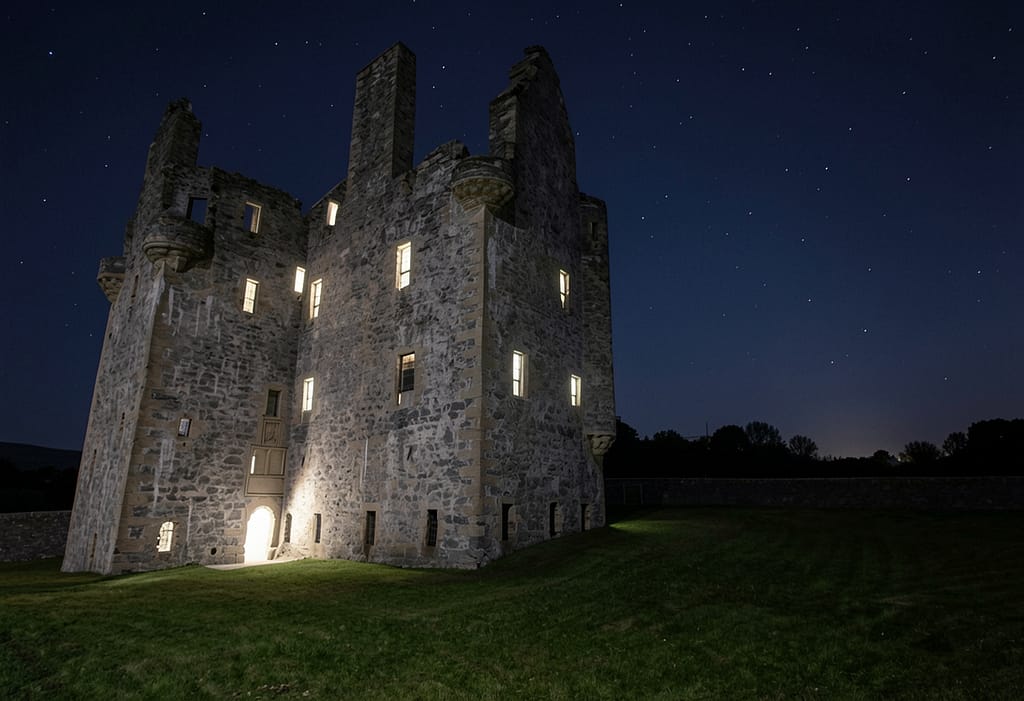
Scalloway Castle, Shetland: Power, Fear, and a Darker Legacy
Scalloway Castle is best approached as a place of power and punishment rather than simply a haunted ruin. Its strongest story lies in the brutal politics of Earl Patrick Stewart’s era, when fear, authority, and execution shaped the atmosphere around the castle. That gives the article a darker historical hook and makes the haunting feel rooted in real violence rather than generic spooky tradition.
A castle of judgment
The castle’s reputation is inseparable from the harsh rule associated with Earl Patrick Stewart. When a site is tied to power, fear, and punishment, it naturally becomes a magnet for ghost stories because people read emotional residue into its walls. Scalloway Castle is therefore less a romantic ruin and more a monument to the consequences of authority.
That framing works especially well for an article because it allows the hauntings to follow the history. Instead of retelling the same old “castle ghost” material, the piece can focus on the tensions created by rule, trial, and execution. That gives the location more weight and makes it more memorable.
Witch-trial atmosphere
The witch-trial angle is the strongest route into Scalloway Castle because it places the building inside a wider landscape of fear. The connection to executions at Gallow Hill turns the site into part of a larger system of judgment, not just a standalone ruin. That broader context helps readers understand why the castle continues to attract paranormal attention.
In ghost writing, the best historical hauntings often come from places where fear was public and deliberate. Scalloway Castle fits that pattern because the story is not only about what happened inside the walls, but about the mood those events created across the surrounding area. The result is a darker, more structural kind of haunting.
Why the castle feels haunted
A castle linked to authority and death does not need a long list of named ghosts to feel disturbing. The atmosphere itself does much of the work. Visitors are reacting to history, but that history is tied to execution, control, and the human cost of power.
That is why the article should lean into tone as much as detail. Scalloway Castle is a place where the setting carries the narrative, and the narrative is one of fear rather than comfort. A feature built around that idea will feel more original than a simple “ghosts seen here” list.
The value of the darker angle
This approach also keeps the piece distinct from Shetland’s other haunted-location profiles. Windhouse can focus on layered entities and Busta House on a resident spirit, while Scalloway Castle becomes the island’s historical warning sign. That variety is useful because it prevents the content from feeling repetitive across locations.
A darker-history article also has better narrative momentum. Readers can move from the castle’s political significance into its ghostly legacy without the piece feeling forced. Scalloway Castle then becomes not just haunted, but historically consequential in a way that leaves a lasting chill.
We would love to investigate this location, but right now we are running events at Lark Lane Liverpool, Mayer Hall Wirral, Vernon Institute Chester, Penrhyn Old Hall, Coffee House Wavertree, Transport Museum Manchester.
DeadLive – taking you where the haunting is happening.