
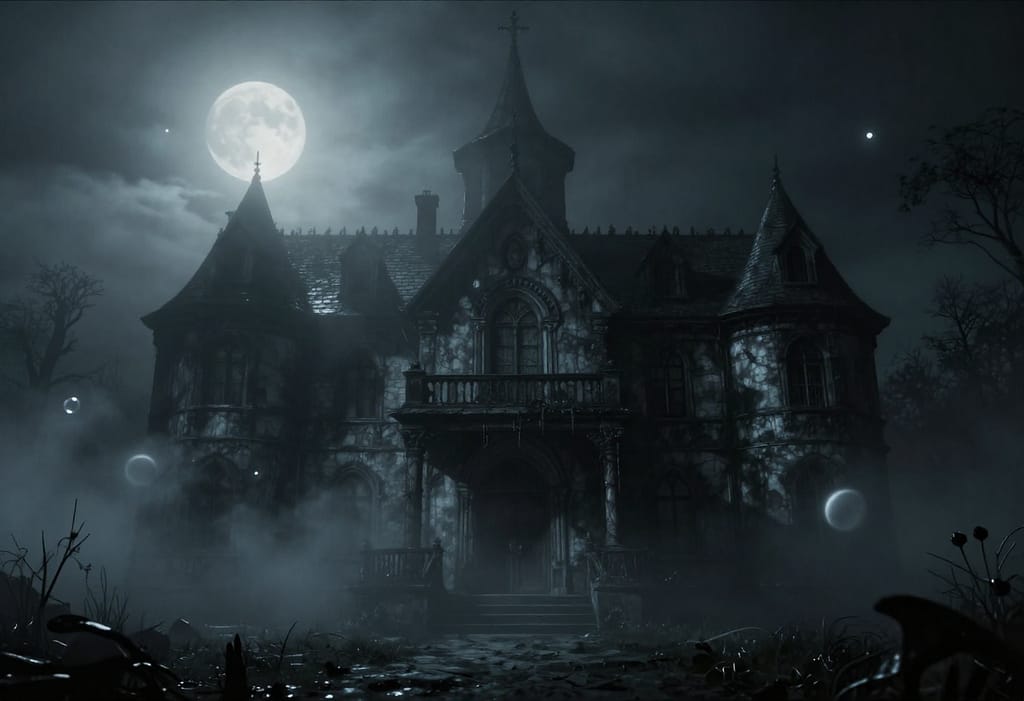
Central England’s heartland brews hauntings from Civil War scars and plague pits. Ancient coaching inns, Norman fortresses and blood-soaked fields form a spine of ghost stories that still make locals lower their voices. These 11 locations showcase the Midlands at its eeriest – from marching phantom armies at Edgehill to headless monks in ruined priories – and are perfect inspiration for future investigations and ghost hunts.
Why the Midlands is Riddled with Ghost Legends
Sitting between North and South, the Midlands became a battlefield corridor during the English Civil War and earlier conflicts. Royalists and Parliamentarians clashed repeatedly across Warwickshire, Staffordshire and Northamptonshire, leaving mass graves and unfinished business behind.
Industrial expansion later carved canals, mines and factories into older sacred landscapes, disturbing burial grounds and plague pits. Inns on crucial coaching routes saw highwaymen, soldiers and desperate fugitives, many of whom never reached their destinations alive. This layered history – Saxon to Victorian – ensures almost every old stone has a story, and some of those storytellers are still very much awake.
1. Tutbury Castle, Staffordshire
Perched above the River Dove, Tutbury Castle dates back to the 11th century and is best known as a prison for Mary, Queen of Scots, who was held there multiple times during the 1500s. Legend says Mary appears in a shimmering gown on the ramparts, especially around the anniversary of her imprisonment, her figure dissolving into the mist before startled witnesses. Staff also report a spectral white lady gliding across the Great Hall, the laughter of unseen children and a clanking suit of armour that walks without a body. Vigils under the ruined towers often produce sudden icy blasts and the sound of footsteps circling groups in the dark.
2. Edgehill Battlefield, Warwickshire
Edgehill was the first pitched battle of the English Civil War in 1642, with thousands killed or maimed on the rolling Warwickshire fields. Within months, villagers began reporting ghostly soldiers locked in eternal combat in the night sky above the battlefield – phantom armies clashing with muskets, drums and shouts that faded as dawn broke. Royal commissioners sent to investigate allegedly saw spectral regiments marching and recognised dead officers by sight. Modern visitors still hear distant cannon fire on still evenings and see shadowy ranks shifting across the fields, even when the area stands completely empty.
3. Dudley Castle, West Midlands
Dudley Castle, founded around 1071, is widely regarded as one of the most haunted strongholds in the West Midlands. Its most famous phantom is the Grey Lady, believed to be Dorothy Beaumont, who died in childbirth and is said to wander the grounds searching for her lost baby and husband. Witnesses see her at the window of the Sharington Range, or drifting along the castle walls before simply vanishing.
Staff working in the undercroft hear low moans, sudden door slams and feel blasts of icy air as if someone has walked straight through them. During paranormal events, guests report disembodied voices calling names and distinct footsteps pacing circles around them in the darkness of the ruined keep.
4. Cannock Chase, Staffordshire
Cannock Chase is a forested plateau whose tranquil paths hide a stranger reputation. While it’s famous in modern folklore for UFO sightings and the so‑called Black-Eyed Child, older tales speak of phantom soldiers and miners haunting the tree line, tied to local collieries and wartime camps. Walkers report the sound of marching boots on empty tracks, children crying where no one is visible, and a heavy feeling of being watched between the pines. Torches flicker, batteries drain and shapes flit just out of sight, making the Chase a favourite for open-air vigils.
5. The Ancient Ram Inn (Gateway to the Midlands), Gloucestershire fringe
Although technically in Gloucestershire, the Ancient Ram Inn often features in Midlands ghost circuits because of its proximity and notoriety. Often dubbed one of Britain’s most haunted pubs, the 15th‑century inn sits on alleged pagan burial ground and former lay lines. Visitors describe oppressive energy in the Bishop’s Room, where a monk’s figure has appeared beside the bed, and a so‑called “Witches’ Room” where a female spirit is said to have been persecuted.
Reports include demonic growls, guests being dragged from beds and unexplained bruises appearing after a night’s stay. For investigators, it’s a textbook example of a compact building packed with overlapping hauntings.
6. Borley Rectory Ruins & Church, Essex fringe
While Essex lies just beyond the Midlands, the ruins of Borley Rectory and its neighbouring church have long been part of “central England” ghost pilgrimages. Dubbed “the most haunted house in England” in the early 20th century, the original rectory has burned down, but the lane and churchyard remain active. Phantom coach and horses thunder along the road, a nun’s figure crosses through a bricked‑up doorway, and disembodied tapping echoes in the church at night. Ghost hunters still capture whispered voices and strange lights among the gravestones, as if the notoriety has kept the spirits restless.
7. The Skirrid Mountain Inn (Gateway from the West), Abergavenny Approach
Travellers approaching the Midlands from Wales often stop at the Skirrid Mountain Inn, an ancient hostelry linked to rebel hangings and courtroom trials. It’s reputedly one of Britain’s most haunted pubs, a place where the upstairs beam once served as a gallows. Visitors feel invisible ropes tightening around their necks, leaving red marks, and hear the creak of a noose swinging when the bar is quiet. Phantom footsteps cross empty rooms, and glasses slide along the bar without human hands, making it a stark reminder of how justice was once delivered on the roads in and out of central England.
8. Pluckley, Kent (Haunted Village on the Eastern Corridor)
Pluckley, often cited as Britain’s most haunted village, sits on one of the key historic approaches to the Midlands from the southeast. With at least a dozen documented apparitions, it feels like a condensed museum of ghost lore. A screaming man is heard falling from a tree at “Fright Corner”, a highwayman appears and vanishes in the lane, and a schoolmaster’s ghost has been seen in the village. There are also tales of a spectral coach and horses racing through the night and a phantom dog with a white coat. For investigators travelling up-country, it’s a natural stop to experience multiple hauntings in a single stroll.
9. Ancient Inns of the Midlands Coaching Routes
The Midlands’ position as a crossroads filled the region with coaching inns where soldiers, merchants and outlaws mingled. Many now host permanent phantom guests. One classic type of haunting involves World War I soldiers returning to the inn where they were recruited, such as the Trooper Inn’s ghostly rider seen crossing a field near the pub, still in uniform. Other inns report highwaymen in tricorn hats stepping through doors that no longer exist, and Napoleonic-era soldiers who appear to be run through by invisible blades before melting into the stairwell shadows. Each inn carries its own micro‑legend, but the pattern is the same: travellers who never made it home.
10. Edgehill & Naseby Corridor, Warwickshire–Northamptonshire
In addition to Edgehill itself, the wider corridor leading towards Naseby has a reputation for recurring battle replays. Residents speak of drumbeats and shouted orders on clear nights, echoing across fields where no re‑enactment is scheduled. Phantom cavalry charge fence lines, and distant bugles sound as if coming over the horizon. Investigators setting up audio recorders here hope to capture full sequences of battle commands, using the open landscape as a vast natural “spirit box”.
11. Bones Beneath the Streets – Plague Pits and City Ghosts
From Birmingham to Leicester and Nottingham, rapid growth covered over plague pits and forgotten burial grounds as streets and factories spread. Builders occasionally uncover skulls and bones, reminding everyone how shallow the past can be. While specific pit locations are often unmarked, reports of hauntings near known medieval cemeteries and demolished churchyards are common – shadow figures crossing modern pavements, sudden waves of nausea outside perfectly ordinary office blocks, and cold vortices that ignore the weather. Central England’s markets and car parks may sit atop more ghosts than any castle.
Common Threads in Midlands Hauntings
Several themes link these locations:
Civil War echoes: Edgehill, the wider corridor and castle fortresses host marching regiments and musket fire, replaying 17th‑century conflicts like a broken record.
Grief‑bound women: Grey Ladies and bereaved mothers appear at Dudley and Tutbury, tied to childbirth deaths and lost children, forever searching the battlements and corridors.
Highwaymen and travellers: Haunted inns along trunk roads showcase murdered guests and executed bandits, some still riding phantom horses or pacing taprooms at closing time.
Villages of many ghosts: Pluckley demonstrates how a small settlement can host a whole ensemble of spirits, mirroring how other Midlands villages may hide multiple stories beneath a quiet surface.
For paranormal investigators, the Midlands isn’t just a drive‑through region between headline cities. It’s a dense web of battlefields, ruins and roadside inns where history is still playing out in whispers, footsteps and flickers of movement at the edge of the torch beam.
We would love to investigate these locations, but right now we are running events at Lark Lane Liverpool, Mayer Hall Wirral, Penrhyn Old Hall, Coffee House Wavertree, Transport Museum Manchester.
DeadLive – taking you where the haunting is happening.